Is It Acne or Something Else? The Skin Conditions Most Often Mistaken for Breakouts
You have tried the spot treatments, the late night extractions, maybe even a round of prescription topicals, and your skin still is not clearing the way acne is supposed to clear.
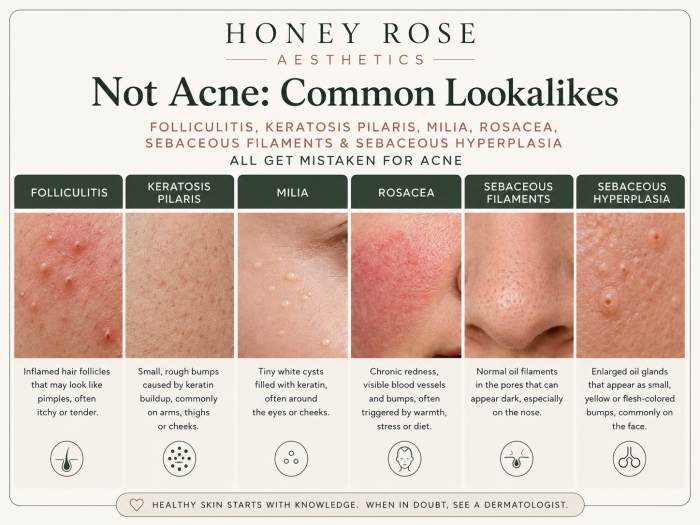
Here is something worth sitting with: some of the most common conditions that look like acne are not acne at all. Folliculitis, keratosis pilaris, milia, rosacea, sebaceous filaments, and sebaceous hyperplasia can all show up as bumps, redness, or texture that reads as a breakout, but each has a different cause and needs a different plan. At Honey Rose Aesthetics in West Puyallup, sorting out which one you are actually looking at is one of the most valuable parts of a first skin analysis, especially for clients who feel like they have tried everything already.
Why Do So Many Skin Concerns Get Mistaken for Acne?
At a glance, a lot of skin concerns look similar: small bumps, redness, an occasional pustule. But acne starts with a clogged hair follicle, oil, and acne-causing bacteria working together, and the conditions on this list start somewhere else entirely, which is why treating the wrong cause with acne products is a common reason a routine stops working. A benzoyl peroxide routine built for clogged pores can aggravate rosacea, and exfoliation meant for acne-prone texture can irritate keratosis pilaris instead of softening it. We cover this same mismatch from the acne side in What Causes Breakouts and How to Actually Clear Them, our deeper look at what causes breakouts and the four acne grades.
Six Conditions That Look Like Acne (But Are Not)
A plain-English breakdown of the look-alikes we see most often in clients from Puyallup, Tacoma, Sumner, and Bonney Lake.
Folliculitis
Small, often uniform red bumps or pustules caused by irritation or infection of the hair follicle rather than a clogged pore, usually where there is friction or occlusion, like the jawline, chest, back, or thighs. Care that calms and protects the follicle tends to work better here than standard acne actives.
Keratosis Pilaris
Small, rough, sandpaper-like bumps, most common on the upper arms, thighs, or cheeks, caused by keratin buildup around the follicle rather than excess oil. Gentle exfoliation and consistent hydration usually work better than drying acne treatments, and KP tends to be a long-term trait to manage rather than something that fully resolves.
Milia
Tiny, firm, white bumps just under the skin’s surface, often around the eyes or cheeks. Unlike a whitehead, milia are not an open pore, so a trained provider has to clear them with a different technique than a blackhead extraction.
Rosacea
Redness, visible vessels, and sometimes papules or pustules that genuinely resemble breakouts, making it one of the most common acne look-alikes we see. It is an inflammatory, vascular condition often triggered by heat, sun, alcohol, or stress, and it typically calls for a calming, barrier-focused approach rather than acne actives.
Sebaceous Filaments
Not actually a condition. These are a normal part of follicle anatomy, the small grey or tan dots visible on the nose and center of the face in oilier skin types, and they always return after extraction. Balanced, consistent care works better than trying to eliminate them.
Sebaceous Hyperplasia
A small, soft, yellowish bump, sometimes with a slightly indented center, caused by enlarged oil glands rather than a clogged follicle. It becomes more common with age and sun exposure, and clients often mistake it for a stubborn whitehead that will not clear.
Why a Skin Analysis in Puyallup Matters More Than Guessing
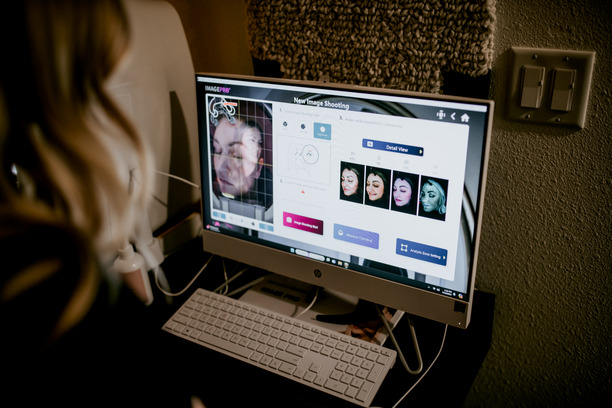
Every one of these conditions can look almost identical to acne in a phone photo or a bathroom mirror, which is why guessing rarely works. At Honey Rose Aesthetics, every new client starts with a consultation and skin analysis, sometimes supported by dermal imaging, so we treat what is actually there instead of what it resembles. Our team includes Certified Acne Experts who train monthly, in part on distinguishing acne from its look-alikes, and advanced services carry Medical Director oversight. Clients travel to our Puyallup studio from across Pierce County, including Tacoma, Sumner, and Bonney Lake, often after months of treating the wrong thing at home.
What Honey Rose Recommends Once We Know What We Are Actually Treating
Once your skin analysis is complete, your plan reflects what your skin actually needs, not a generic acne protocol. That may mean a simple mapped AM and PM home care routine using science-backed products from Face Reality, AlumierMD, Noon Aesthetics, or GlyMed Plus, adjusted for a look-alike condition rather than acne itself, and it may include professional treatments like HydraFacial, LED therapy, chemical peels, or Aerolase Neo Elite when appropriate for your specific concern. If active acne is present alongside a look-alike condition, your provider may recommend Acne Boot Camp or our Face Reality Acne Program for that piece specifically. Acne Program link here!
Results and timelines vary depending on the condition, your consistency, and how your skin responds, and we will always tell you honestly what to expect. For clients managing an ongoing concern like rosacea or keratosis pilaris, membership can be the smartest way to stay consistent with professional care while protecting your budget. Membership link here!
Frequently Asked Questions About Conditions That Look Like Acne
How can I tell if it’s acne or something else, like rosacea? Acne involves clogged pores and inflammatory breakouts tied to oil and bacteria, while rosacea tends to show up as persistent redness and flushing triggered by heat or certain foods. A professional skin analysis is the most reliable way to tell them apart.
Do I need to treat sebaceous filaments? They are a normal part of your skin’s anatomy, not a condition, so they do not need to be eliminated. Balanced home care may minimize their appearance, but they will naturally return, which is expected.
Can keratosis pilaris be cured? It is typically a long-term trait rather than something that fully resolves, but consistent gentle exfoliation and hydration can help improve the appearance of texture for many clients over time.
Is milia caused by using the wrong skincare products? Milia can be related to heavy or occlusive products, but it can happen regardless of what you use. It sits under intact skin, so it needs a different extraction technique than a blackhead, best left to a trained provider.
Does folliculitis need antibiotics? Some cases do need medical treatment, which is one reason an accurate assessment matters. When appropriate, we will tell you if your case looks like something a physician should evaluate alongside your skincare plan.
Can Honey Rose Aesthetics diagnose my skin condition? Our team is trained to recognize the visual patterns of these look-alike conditions and guide your plan accordingly, though we are not a substitute for a medical diagnosis. When something needs physician-level evaluation, we will tell you and point you in the right direction.
You Do Not Have to Figure This Out Alone
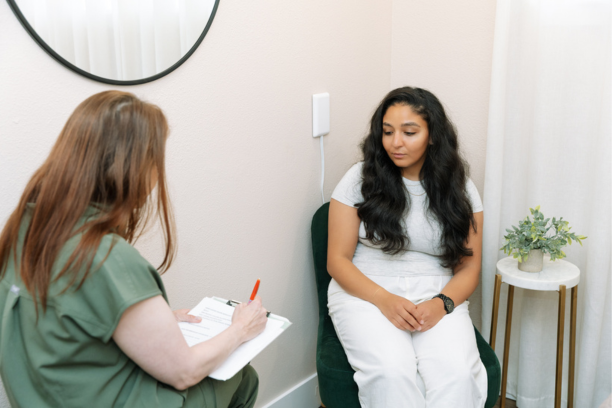
You do not have to decide on your own whether what you are looking at is acne, rosacea, milia, or something else entirely. That is exactly what a consultation and skin analysis are for, and it is often the reason a routine that never worked suddenly starts making sense. If your skin has not responded the way you expected, it might be worth asking a different question: not why isn’t my acne treatment working, but is this actually acne at all.
Book your consultation with Honey Rose Aesthetics today.
Consultations are thorough, unhurried, and built entirely around your skin, whatever it turns out to be.